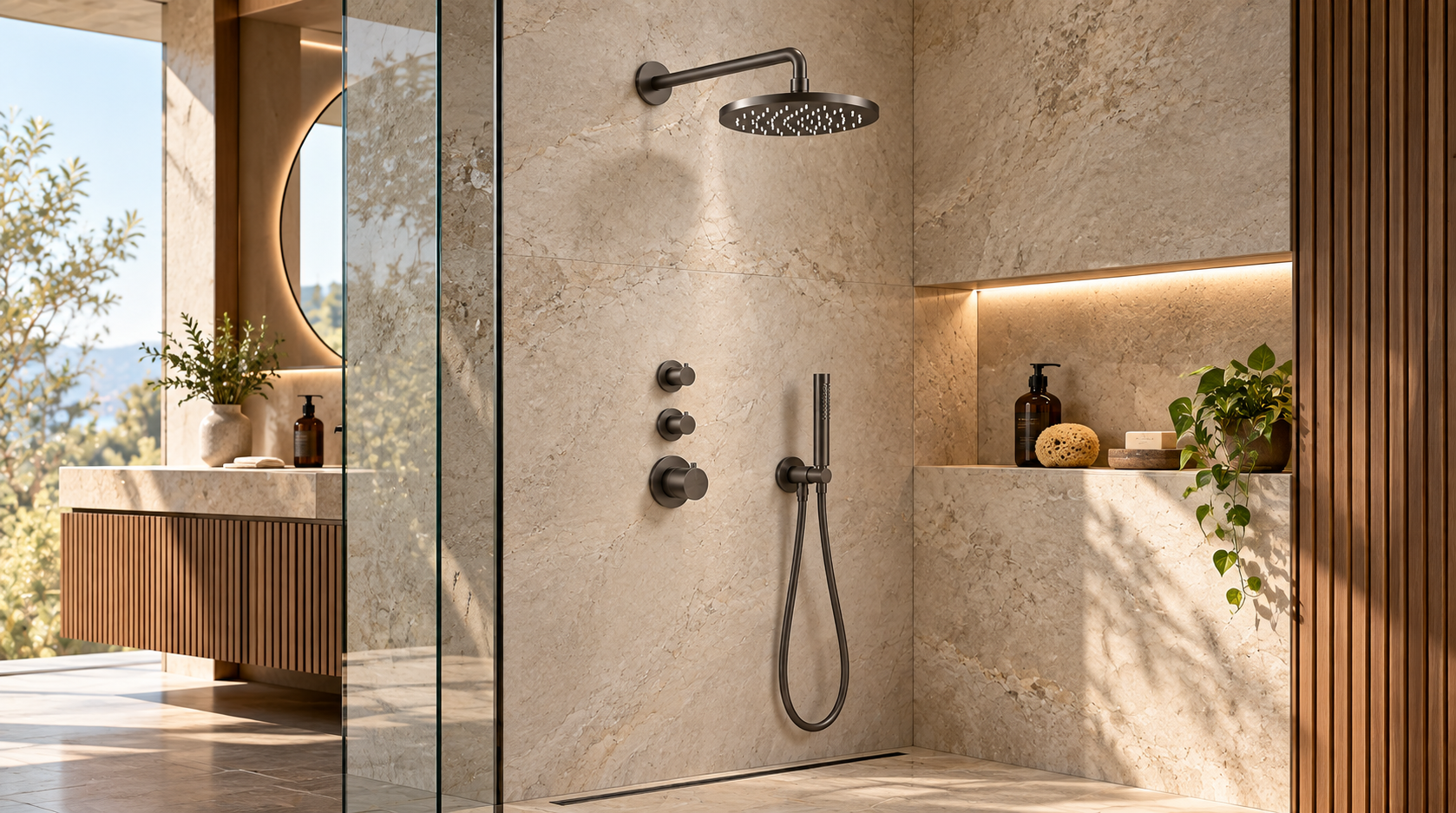
Most gun metal shower sets don't lose their shine from age. They lose it to the wrong cleaning product.
Almost all modern gun metal finishes are PVD-coated (physical vapor deposition), applied over a metal base, commonly brass or stainless steel, and while that coating resists everyday scratching extremely well, it has zero tolerance for bleach, ammonia, or abrasive scrubbing. If your gun metal fixture looks duller or patchier than it did a year ago, the cause is very likely sitting in your bathroom cabinet right now, not the fixture itself.
Clean a gun metal shower set with warm water, a pH-neutral soap, and a soft microfiber cloth, then dry it immediately. That's the entire safe routine. Everything below covers exactly how, plus the specific products that cause the damage in the first place.
What Is Gun Metal Finish (And Why It Needs Special Care)
Gun metal isn't a raw metal alloy on modern shower sets. It's a coating, almost always applied by PVD, a vacuum process that bonds a thin metallic layer onto the fixture's base metal, typically brass or stainless steel, under high heat and pressure. The result is a finish that's harder and more scratch-resistant than standard chrome or nickel plating, which is why PVD gun metal holds its color and doesn't flake the way older electroplated finishes eventually do.
That durability is mechanical, not chemical. PVD coatings resist scratching and everyday wear extremely well, but they're still vulnerable to strong acids, alkalis, and abrasive contact. A scouring pad won't visibly scratch gun metal the way it would a soft chrome finish, but repeated abrasive contact combined with the wrong cleaning chemical will dull the coating's sheen over months, and that dulling doesn't reverse. This is the main reason gun metal shower sets develop a patchy or faded look years before they should: not from water contact, but from the wrong cleaner used repeatedly.
Water itself isn't the enemy. Standing water left to dry on any metal finish is, because it leaves behind mineral deposits that etch into the surface over time, especially in hard water areas.
Daily and Weekly Cleaning Routine (Safe Method)
The single most protective habit for a gun metal finish costs nothing and takes fifteen seconds: dry it after every shower.
After each use (15 seconds):
- Run a hand or a small squeegee over the shower head, valve, and any exposed fixture surfaces to remove standing water.
- Wipe with a dry microfiber cloth if water is still visible.
This single step prevents most of the mineral buildup that eventually requires stronger cleaning.
Weekly clean (2-3 minutes):
- Mix a few drops of pH-neutral dish soap or a dedicated pH-neutral bathroom cleaner into warm water.
- Dip a soft microfiber cloth into the solution and wring it out so it's damp, not wet.
- Wipe the entire fixture, including the base of the shower head, the valve body, and any visible joints where grime collects.
- Rinse with a second clean, damp microfiber cloth to remove any soap residue.
- Dry immediately and completely with a dry microfiber cloth. Don't let it air-dry.
That last step matters more than people expect. Air-drying gives mineral-laden water time to evaporate slowly and leave deposits behind exactly where they sit. A towel dry takes the water away before that happens.
Monthly check:
Look closely at the shower head nozzles for reduced water flow or an uneven spray pattern. This usually signals mineral buildup starting inside the nozzles rather than on the visible finish, and it's easiest to address before it restricts flow noticeably. See the limescale section below for the safe method.
How to Remove Limescale and Water Spots Safely
Limescale (the white, chalky mineral buildup from hard water) is the most common issue on gun metal fixtures, and it's also where most damage happens, because the instinct is to reach for a strong acidic descaler or undiluted vinegar. Both can be problematic on a PVD finish if used incorrectly.
Safe method for light limescale and water spots:
- Mix one part white vinegar to three parts warm water in a spray bottle or bowl.
- Apply to a soft microfiber cloth (not directly onto the fixture) and wipe the affected area.
- Leave it for no more than 3-5 minutes. Never leave vinegar, diluted or not, sitting on gun metal for an extended period; even diluted acid left too long can dull a coating over repeated exposure.
- Wipe clean with a second damp cloth to fully remove any residue.
- Dry immediately with a microfiber cloth.
For stubborn limescale on nozzles:
- If the shower head has a removable or flexible silicone nozzle plate, rub gently with a fingertip while running warm water to dislodge deposits. Silicone nozzles are designed for this and won't scratch.
- For fixed metal nozzles, use a soft-bristled toothbrush (never a wire brush) with the diluted vinegar solution above, working gently rather than scrubbing hard.
- Rinse thoroughly and dry.
What to avoid entirely: commercial descalers marketed for chrome or stainless steel often contain hydrochloric or phosphoric acid at concentrations too strong for a PVD coating. If a product's label doesn't specifically list "safe for PVD" or "safe for gun metal/gunmetal finishes," don't use it, and always check the manufacturer's care instructions for your specific fixture before trying a new product for the first time.
What to Never Use on Gun Metal Fixtures
|
Never use |
Why it damages the finish |
|
Bleach or bleach-based cleaners |
Breaks down the PVD coating chemically, causing discoloration and pitting |
|
Ammonia-based glass or bathroom cleaners |
Reacts with the coating over repeated use, dulling the sheen |
|
Abrasive scouring pads or steel wool |
Creates micro-scratches that trap grime and accelerate wear, even though PVD resists light scratching |
|
Undiluted vinegar left on for extended periods |
Acidic exposure over time etches and dulls the finish |
|
Strong acidic descalers (hydrochloric, phosphoric acid based) |
Strips the coating faster than any other common household product |
|
Magic eraser-type melamine sponges |
Function as a mild abrasive; repeated use wears down the coating's surface |
|
Hard water left to air-dry |
Not a cleaner, but the single biggest cause of visible spotting and long-term etching |
Do's and Don'ts at a Glance
|
Do |
Don't |
|
Dry the fixture after every shower |
Let water air-dry on the surface |
|
Use pH-neutral soap and warm water weekly |
Use bleach, ammonia, or acidic descalers |
|
Use a soft microfiber cloth |
Use scouring pads, steel wool, or melamine sponges |
|
Dilute vinegar 1:3 with water for limescale, and rinse quickly |
Apply undiluted vinegar or leave any acid solution on for more than a few minutes |
|
Check manufacturer care instructions for your specific fixture |
Assume all "gunmetal-safe" claims apply to every product on the market |
|
Address limescale monthly before it builds up |
Wait until flow is visibly restricted to clean nozzles |
Extra Tips for Hard Water Areas and Long-Term Protection
Hard water dramatically shortens the time between needing a deep clean, since it deposits calcium and magnesium minerals on every wet surface it touches. A few adjustments make a real difference over the fixture's lifespan:
- Install a shower head filter or inline water softener if the local water supply is notably hard. This reduces mineral deposit buildup at the source rather than managing it after the fact.
- Increase the drying step to after every use, not just daily, in hard water regions. The fifteen-second habit matters more here than anywhere else.
- Avoid pairing gun metal with unfiltered hard water and infrequent use. A shower used daily and dried consistently often ages better than one used occasionally and left wet between uses, since standing water sits longer relative to actual use.
- Ventilate the bathroom after showering. Trapped humidity slows drying on all fixtures, not just the shower set, and contributes to mineral deposits settling rather than evaporating cleanly.
- Avoid harsh multi-surface cleaners marketed for "bathroom and kitchen" use, since many contain ammonia or bleach for grease-cutting purposes that have nothing to do with metal finishes.
- Re-check care instructions annually. Cleaning product formulations change, and a product that was pH-neutral a few years ago may have been reformulated.


Followed consistently, this routine is what keeps a PVD gun metal finish looking even and consistent for years rather than developing the patchy, dulled appearance that comes from the wrong cleaner used repeatedly, not from age itself.
Our PVD gun metal shower sets and matching rain heads are built to hold their finish over years of daily use, not just look right on day one.
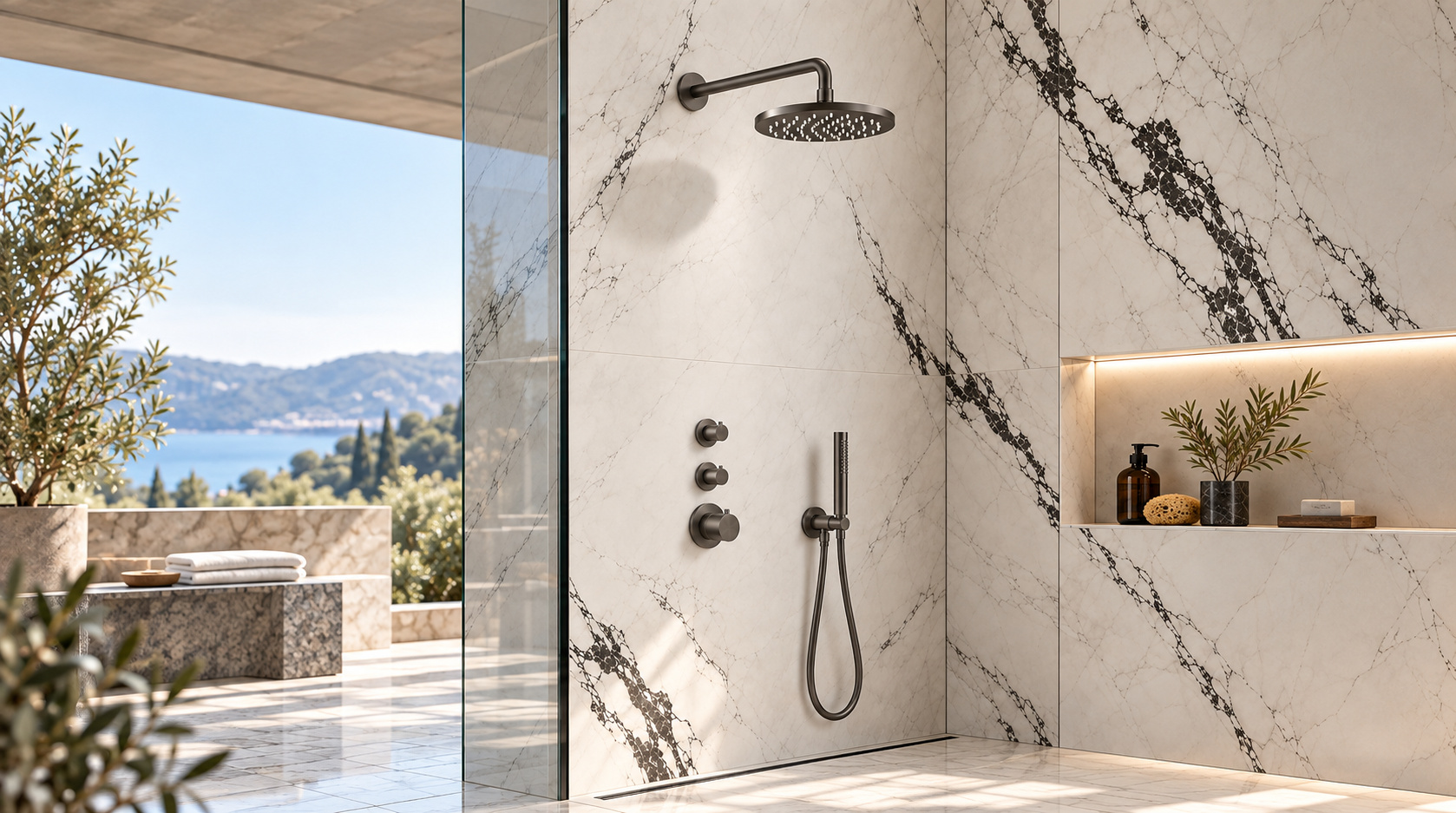
A gun metal shower set doesn't need special products to stay looking right. It needs consistency: dry it after use, clean it weekly with something pH-neutral, and keep bleach, ammonia, and abrasive pads away from it permanently. The finish is durable against everyday wear; it's chemical exposure and standing water that cause the damage people usually blame on "cheap coating" or age.
FAQ
Can I use vinegar to clean gun metal shower fixtures?
Diluted vinegar (one part vinegar to three parts water) is safe for occasional limescale removal if wiped on, left for no more than 3-5 minutes, and rinsed off promptly. Undiluted vinegar or leaving any vinegar solution on for extended periods can dull the finish over repeated use.
Is PVD gun metal the same as physical gun metal alloy?
No. Almost all gun metal finishes on modern shower fixtures are PVD coatings applied over a metal base, not a solid gun metal alloy. The coating is what determines both the color and the cleaning requirements.
Will bleach ruin a gun metal shower head?
Yes, over time or even with a single strong application. Bleach chemically breaks down PVD coatings, causing discoloration and pitting that can't be reversed or repaired at home.
How often should I clean a gun metal shower set?
Dry it after every use, and give it a full clean with warm water and pH-neutral soap once a week. In hard water areas, check for limescale buildup monthly rather than waiting for reduced water flow.
Why is my gun metal shower head losing its color?
Fading or patchy discoloration on a PVD finish almost always comes from chemical exposure (bleach, ammonia, strong descalers) or abrasive cleaning tools, not from normal water contact or age alone.
Can I use a magic eraser or melamine sponge on gun metal fixtures?
It's best avoided. Melamine sponges are a mild abrasive, and repeated use gradually wears down a PVD coating's surface even though it won't show immediate scratching the way it would on a softer finish.
What's the safest everyday cleaner for gun metal bathroom fixtures?
Warm water with a few drops of pH-neutral dish soap, applied with a soft microfiber cloth and followed by a full dry. This combination is safe for essentially all PVD finishes and doesn't require checking product labels each time.
Does hard water damage gun metal finishes faster than soft water?
Yes. Hard water deposits more minerals, which build into visible limescale faster and etch the surface if left to dry repeatedly. Drying the fixture after every use matters more in hard water areas than anywhere else.