Order bathroom taps only after you match the mixer type to your basin or bath, confirm the tap holes and spout reach, and check that the finish and mounting suit a wet room. This guide covers basin mixers, bath fillers and bath and shower mixers, then walks through what to check before checkout, using Aquanello Heritage as the example range throughout.
A wrong tap order usually means a return box, a second wait for delivery, and a bathroom that stays unfinished on the day you had planned for it. Most of that is avoidable with five minutes of checking before you pay.
Basin mixer vs bath filler vs bath/shower mixer
These three tap types look similar in photos, and mixing them up is a common reason a customer has to send a tap back. You will also see them called monobloc, pillar taps, or waterfall spout on other sites. This section maps that vocabulary to what you are actually buying.
Basin mixer. A basin mixer sits on or beside the washbasin and blends hot and cold. When it uses a single hole and a single lever, it is also called a monobloc tap, the style used across most modern basin mixers. Most renovators are replacing pillar taps (two separate taps, hot and cold, no blending) or an older mono mixer when they choose one. Browse basin mixer taps or washbasin once you know your hole count and spout height.
Bath filler (bath mixer without shower). A bath filler fills the tub only, and is not a shower valve unless the product page lists a shower outlet or hand shower. Bath fillers also come in two spout shapes: a standard round or square spout, and a waterfall spout, where water sheets out of a wide, flat opening instead of a single stream. The Heritage range uses the classic standard spout.
Bath/shower mixer. A bath/shower mixer fills the bath and also sends water to a hand shower or shower outlet, for when one set of controls needs to cover both bathing and rinsing. If a separate shower valve is already installed, a plain bath filler is usually enough.



What to check before you order
Work through these checks in order. Each one takes a minute, and skipping any of them is a common cause of returns and awkward installs.
Tap holes: 1, 2 or 3. Count the holes in the basin or bath deck, or confirm the wall rough-in for wall-mounted models. One hole is typically a mono, or monobloc, mixer. Two holes usually mean classic two-handle controls, or many surface-mounted bath mixers. Three holes often mean a spout plus two handles, so match the configuration, not just the style in the photo. Heritage Manor and Heritage Ascot bath mixers are specified for two tap holes and surface mounting, and it is worth checking that before you replace an older mixer with one of these.
Spout reach and height. Spout reach needs to clear the rim and land over the bowl or tub without hitting a wall, cabinet or screen. If your basin sits above the counter as a vessel bowl, you generally need a tall, or "high-spout," basin tap rather than a standard-height mixer like Heritage Ascot or Heritage Manor. Do not estimate measurements from a lifestyle photo: check spout reach, height and center distance (the spacing between connections on two-hole mixers) in the specifications, and measure your own basin or bath as well. Heritage Manor CR-3001-HM lists a 182 mm center distance, for example, while Heritage Ascot NB-3002-HA lists 150 mm, so one Heritage bath mixer will not always fit where another one did.
Water pressure (high vs low). Water pressure varies a great deal from one home to another, gravity-fed in some, mains or boosted in others. Many mixers list a minimum operating pressure on the product page, specific to that mixer, not a fixed figure. With low pressure, look for a low stated minimum, or check with a plumber first. With high pressure, still check the cartridge and aerator suit your setup, since more pressure is not always better for splash on a small basin.
Deck vs wall mounting. Deck, or surface, mounting uses holes in the basin or bath rim. Wall mounting needs correctly spaced wall outlets and usually a different product family. For more on bath layout, see surface-mounted vs wall-mounted bath taps.
Finish: durability as much as looks. Finish affects durability and cleaning as much as looks, especially in a wet room. Chrome is bright and familiar but shows water spots. Stainless look hides fingerprints better than a high polish. Bronze and warm metals have classic character and their own care guidance. Black and coloured coatings need non-abrasive care. Gold and brass-look pairs well with warm tiles. See gold vs chrome bath taps for more detail. Match your visible basin, bath and shower finishes where you can: one finish family looks calmer and cleans more consistently. Browse bathroom fittings for the wider selection.
How to choose for small basins, freestanding baths and rim-mounted tubs
Small basin or cloakroom: prioritise a compact spout reach and a height that does not dominate the bowl, and confirm one hole vs two holes against the ceramic. A classic cross-handle mixer can look wider than a lever mono mixer, so compare width as well as reach. The Heritage Ascot and Heritage Manor basin codes below are the classic two-handle option here.
Freestanding bath: often needs a floor-standing filler, a wall spout, or a deck mixer on a nearby ledge, since rim holes are not always available. Confirm the mounting first, then check spout reach.
Rim-mounted or built-in bath: a two-hole surface-mounted bath mixer is a common fit. Measure the center distance on the bath and on the product itself, and see the bath category for the Heritage bath mixer codes.
Why Aquanello Heritage
A tap gets used and seen every day, which is why these small decisions matter more than most parts of a renovation. Three things are worth knowing before you compare Heritage against a cheaper option.
The mechanism lasts. Heritage mixers use ceramic disc cartridges, which wear far more slowly than older rubber washers, so the mixer keeps a smooth, exact temperature years in instead of starting to drip.
Brass, not a lighter alloy. The Heritage range is built in brass, which resists corrosion and holds its finish better than cheaper zinc-alloy bodies in constant contact with water and steam.
The 5-year warranty is a cost check. If a low-cost mixer fails in year two, you pay for the tap again and pay a plumber to fit it a second time. The warranty shifts that risk back onto Aquanello, not onto you.
Put the extra care into the basin and bath mixer, where daily use and visibility are highest, and be more flexible on fittings that matter less.
Choose a classic line with traditional furniture, a panelled bath, period tiles, or warm metals elsewhere in the room. For a more contemporary scheme, look at the sleeker basin options on our site and the wider Aquanello range.




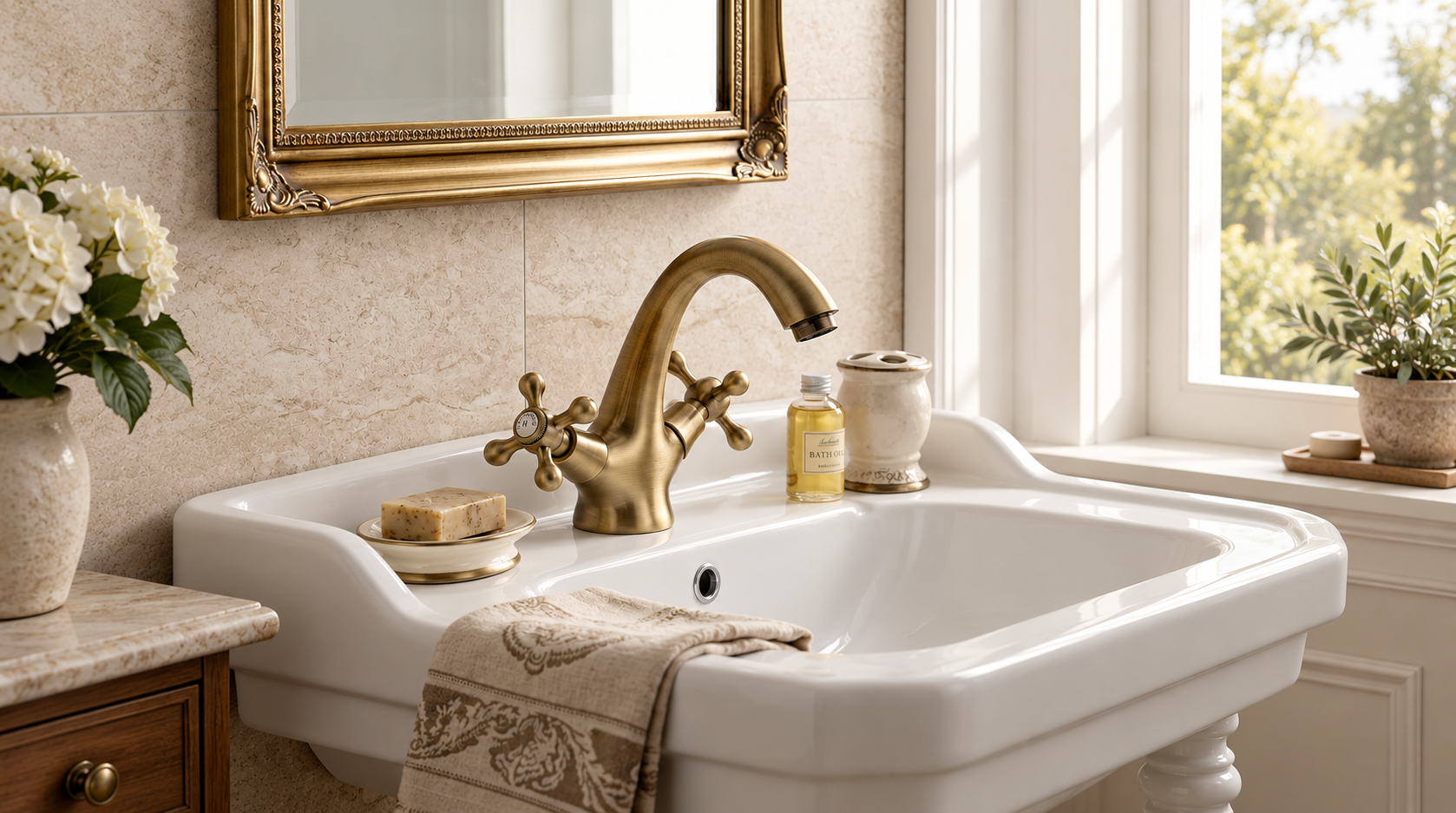
Every check here exists to stop one thing: paying for a tap, waiting for delivery, and finding out it does not fit. Confirm the tap holes, measure the center distance, check the spout height, and read the pressure minimum before you pay.
Browse Aquanello for the Heritage range, then basin mixer taps and bath taps to filter by finish and mounting. Share the product page with your plumber before they book the job.
FAQ
How many tap holes do I need for a basin mixer?
Count the holes already drilled in your basin, or specified for a new one. One hole usually means a mono, or monobloc, mixer. Two holes usually mean separate hot and cold controls. Three holes often mean a spout plus two handles.
What is a monobloc tap, and how is it different from pillar taps?
Monobloc is the industry term for a basin mixer supplied as one unit, fitted through a single tap hole, with one lever controlling both temperature and flow. Pillar taps are the opposite: two separate taps, no blending, usually fitted to a two-hole basin.
What is the difference between a bath filler and a bath/shower mixer?
A bath filler fills the tub only. A bath/shower mixer also sends water to a hand shower or shower outlet.
What water pressure do I need for a bath filler?
Use the minimum operating pressure stated on the product page, since this figure is specific to the product, not a general rule.


